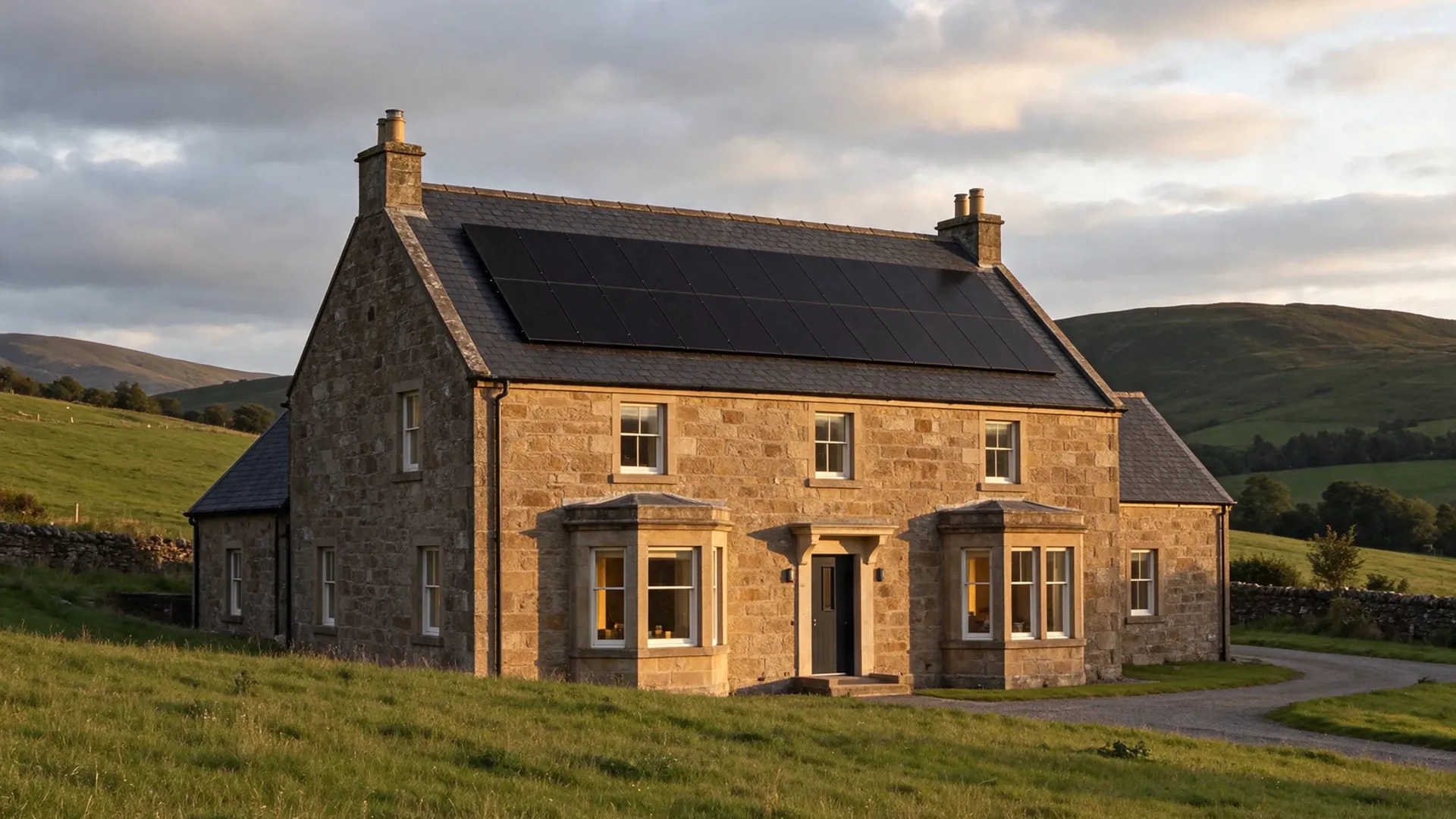
Scotland
Is solar worth it in Scotland?
Long summer days make up for short winter ones, a battery carries the surplus into the evening, and every home is surveyed before any advice is given.
Yes, solar can be worth it in Scotland. Panels run on daylight, not direct sunshine, and Perth\u2019s long summer days compensate for the short winter ones. A south, east or west roof and a battery to store the surplus make the biggest difference. Solar panels and batteries carry 0% VAT until 31 March 2027, and interest-free credit up to \u00a330,000, subject to status, is available.
Key facts
- Solar panels generate from daylight, not direct sunshine, so they still work on overcast Scottish days
- Perth gets over 17 hours of daylight at midsummer and under 7 at midwinter
- A south-facing 4kWp array in Perth produces around 3,300–3,800 kWh a year
- East or west-facing roofs are viable but produce roughly 15–20% less than south-facing
- A battery stores summer surplus for evening use and buys cheap off-peak power in winter
- 0% VAT on solar panels and batteries until 31 March 2027
- Every home is surveyed before any quote or recommendation is given
Last updated: 5 November 2026
Do Scotland’s daylight hours make solar worthwhile?
It is a fair question. Scotland is further north than most of England, and the winter days are undeniably short. But solar panels respond to daylight, not to direct sunshine, so they keep generating under the overcast skies that are common here. Output is lower under heavy cloud than under clear skies, but it does not stop.
The balance across the year is what matters. At midsummer Perth gets over 17 hours of daylight; at midwinter that drops to under 7. Those long summer days compensate for the short winter ones, so most of a year’s generation arrives between April and September. A south-facing 4kWp array in Perth produces in the region of 3,300 to 3,800 kWh across the year.
The question is not whether solar works in Scotland — it does — but whether it works well enough on your roof, for your usage, to be worth it for you. That is what the survey is for.
Perth’s sheltered Tay valley position
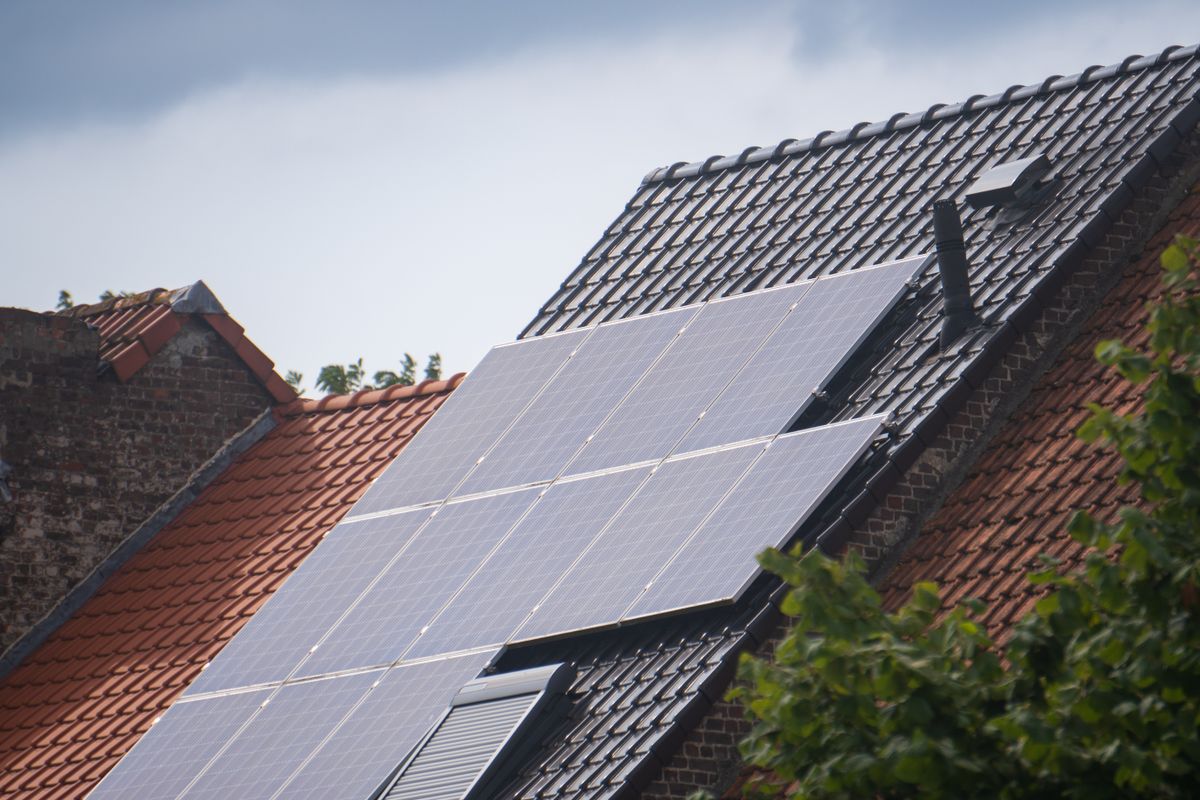
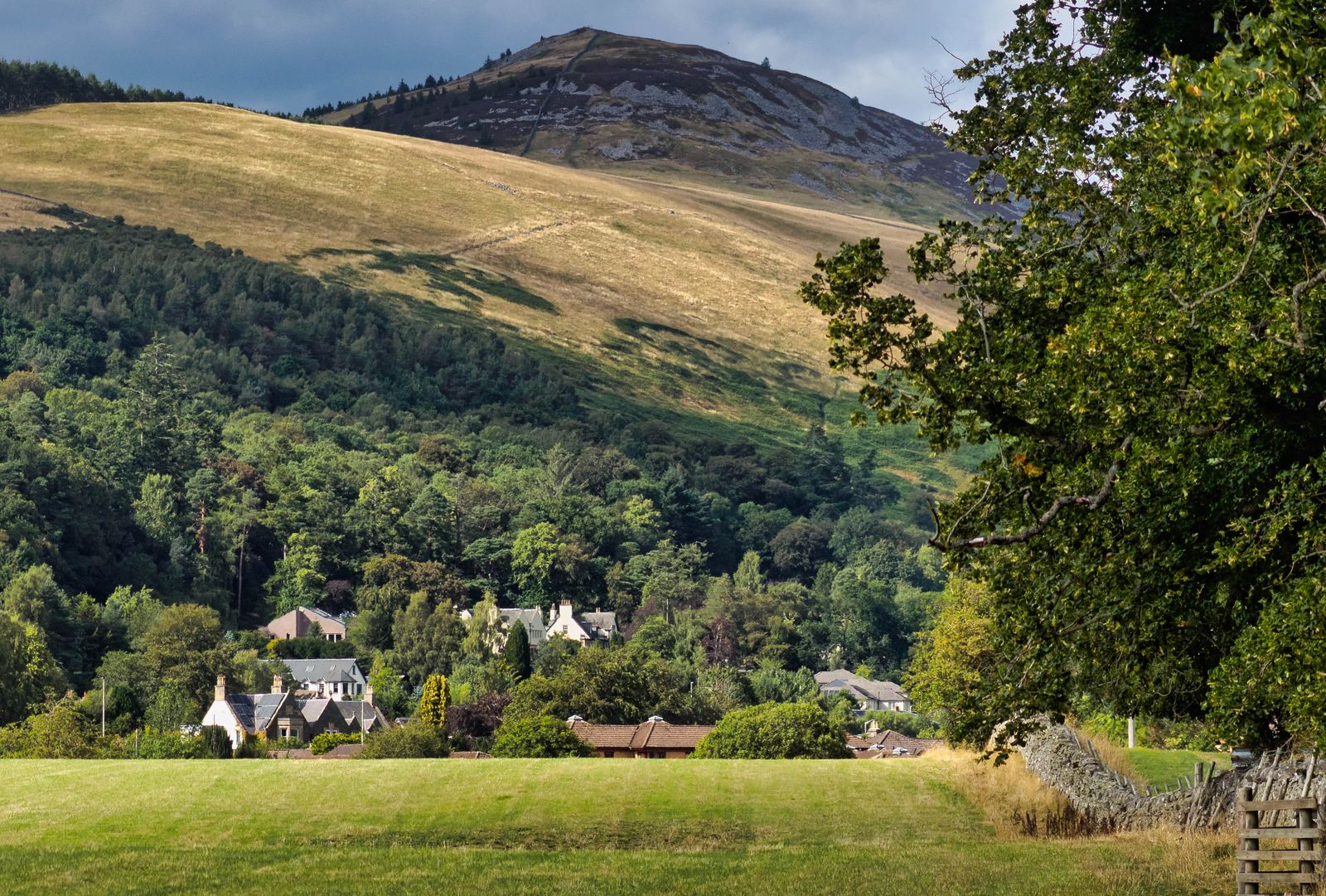
Perth sits at about 56.40°N in the Tay valley — inland, sheltered, and drier than the west coast. That position matters for solar. The surrounding hills blunt the worst of the Atlantic weather systems, so Perth gets more bright, usable days than you might expect for its latitude.
Across Perthshire the picture varies. Sheltered Strathmore plots around Blairgowrie and Coupar Angus have wide, unshaded roof planes, while Highland Perthshire glens around Pitlochry and Aberfeldy carry higher wind loading and more tree canopy to check for shading. Every site is surveyed before any system is proposed.
South, east or west — which roof works?
A south-facing roof is the straightforward choice and gives the highest annual output. But it is not the only option. East and west-facing roofs are viable too, producing roughly 15 to 20% less than south-facing across the year. An east-facing array gives more generation in the morning, a west-facing one more in the afternoon and evening — which can suit households that use power later in the day.
A north-facing roof is generally not worth it on its own. The surveyor checks the orientation and any shading from chimneys, dormers or neighbouring buildings, and advises on the layout that makes sense for your roof. We do not fit panels where they will not perform.
How a battery helps in Scotland
Without a battery, surplus power generated on a long June day is exported to the grid. With a battery, you store that surplus and use it in the evening instead of buying electricity from the grid. That shifts more of what you generate into self-consumption.
In winter, when solar output drops, a battery lets you charge overnight on a cheap off-peak tariff and use that stored power during the day. So a battery works year-round — storing solar in summer and storing cheap grid power in winter. Whether a battery is worth adding depends on how much you generate and when you use electricity, which is part of the survey.
0% VAT until March 2027
Solar panels and batteries currently carry 0% VAT until 31 March 2027. Your written quote reflects this. When the relief ends, VAT will add to the cost, so installing before the deadline is worth considering if you are already minded to.
Finance options
Interest-free credit up to \u00a330,000, subject to status. Ask us about finance when you request your quote and we will explain what is available alongside your written proposal.
Interest-free credit up to \u00a330,000, subject to status.
Every home is surveyed first
We do not give online estimates or one-size-fits-all figures. Every home is surveyed first — roof type, pitch, orientation, shading, access and your electricity use are all checked — and your written quote is confirmed after that survey. It means the advice fits your property rather than a generic assumption.
We install through MCS-certified partners. We cover all Perth and Perthshire postcodes, and we do not turn a lead away because of a postcode.
Related
If you are weighing up a battery, see our battery storage guide and the with-battery vs without comparison. For what moves the price, read the cost guide.
We install through MCS-certified partners.
Answers
Is solar worth it in Scotland?
Last updated: 30 October 2026
Want an honest view on whether solar suits your home?
Tell us about your property and we will arrange a survey and a written quote. We install through MCS-certified partners.
Last updated: 28 October 2026